

A Beginner's Guide to Foraging Wild Herbs in the Italian Countryside
The verges around here change character every few weeks. In March they are bitter greens and tight borage buds; by May the wild fennel is waist-high, the nettles have gone to seed, and the first chamomile is opening in the gravel. Learning to read that progress is one of the quiet pleasures of country life, and it asks for very little: patience, a printed field guide, and the discipline to walk past a plant you cannot name with certainty.
What follows is a starting point rather than a course. How to choose a place worth picking, how to identify a small number of useful plants well, how to harvest so the patch returns next spring, and what to actually do with a basket once you get it home.
Read the Ground Before You Read the Plant
Location decides more about the quality of what you pick than technique does. A perfect nettle growing against a guardrail is not the same nettle as one on an old terrace above the house. Avoid busy roadsides, where dust and exhaust settle on low leaves; avoid the first few metres at the edge of cultivated fields, which are the most likely to have been sprayed; and stay away from building sites, industrial edges and anywhere dogs are regularly walked at leaf height.
Permission matters too. In Italy, much of what looks like open countryside is private, and asking at the farmhouse usually costs nothing and often ends with a tip about where the best wild asparagus grows. Rules vary from region to region: some species are protected, many parks and nature reserves prohibit collection outright, and local councils may have their own regulations on quantities. A quick question at the comune or the park office before your first proper outing saves awkwardness later.
Learn a Few Plants Properly
Ten plants known well will feed and treat you far better than fifty half-known ones. Pick a single species per walk and study it: photograph the flower head, the leaf from above and below, the way the leaves attach to the stem, the shape of the stem itself — square or round, hairy or smooth, hollow or solid. Crush a leaf and smell your fingers. Note where it grows: damp shade, dry stone, disturbed soil.
Cross-check every identification against two sources. A printed regional field guide is worth the money, and so is a neighbour who has picked the same patch for forty years. Phone identification apps are useful for a first guess and nothing more; a screen cannot tell you how a stem smells.
The carrot-family rule
Many of the most useful wild herbs — fennel, wild carrot, wild parsley, chervil — belong to the same family as some of the most poisonous plants in Europe, including poison hemlock. This is where beginners get hurt, so adopt a firm rule: never eat an umbellifer you have not confirmed twice, and never taste one to check. Crush the leaf instead. Wild fennel smells sharply of anise; hemlock smells musty and unpleasant, and its lower stem is usually marked with purple blotches. Skip any patch of mixed umbellifers growing together until you can separate them at a glance.
What Goes in the Basket
- A shallow basket or cloth bag for leaves and flowers, and a paper bag for anything delicate — sealed plastic turns fresh herbs to slime within an hour.
- Sharp scissors or a small knife; a clean cut heals faster than a torn stem.
- Gloves, if nettles are on the list.
- A field guide, a pencil and a notebook — date, place, plant, what worked.
- Water, boots and a hat. A damp cloth over the basket keeps leaves cool on the walk home.
Pick So the Patch Comes Back
Take no more than a third of any one plant, and a third of any one patch. Cut leaves above the growing point rather than pulling the whole thing up, and leave the crown and roots where they are. Leave the strongest plants and the flowering ones alone so they can set seed, and work from the middle of a large patch rather than stripping its edges.
Harvest in the morning after the dew has dried and before the heat of the day, when leaves are at their most aromatic. Take only what you will use within a day or two, and rotate your spots — a notebook is what stops you from returning to the same nettle bed every week until it gives up. If a plant is rare where you live, admire it and move on.
Six Herbs to Start With
Wild fennel (finocchietto selvatico)
Feathery fronds, yellow umbels, an unmistakable anise scent. The tender tops go into pasta with sardines, into pork and sausage stuffings, or under the skin of a roast chicken. The pollen, collected by shaking flowering heads into a paper bag, is the most precious thing in the basket — a pinch over grilled fish. Seeds dry well for winter.
Nettle (ortica)
Pick the top four leaves of young plants with gloves, before flowering. Blanching or cooking destroys the sting entirely. Nettles make a deep-green risotto, a soup with potato, or a frittata; a strong infusion, cooled, is a traditional final rinse for hair and a good feed for the garden.
Borage (borragine)
Hairy leaves tasting faintly of cucumber, and star-shaped blue flowers that look well in a salad or frozen into ice cubes. Use young leaves, and use them occasionally rather than in daily quantity; borage contains compounds that are best not eaten in large or long-term amounts. If you are pregnant, breastfeeding or on medication, ask a pharmacist or doctor before using it as more than a garnish.
Mallow (malva)
Soft, round, slightly mucilaginous leaves that thicken a soup and soothe a scratchy throat. The pale lilac flowers are mild and pretty on a plate. A poultice of chopped leaves wrapped in a clean cloth is a traditional comfort for irritated skin.
Yarrow (achillea)
Bitter and powerful, so use a leaf or two rather than a handful. A small amount in a digestive infusion, or in a wash for tired feet. Some people find the fresh plant irritates their skin; test a little on the forearm first.
Wild mint, thyme and oregano
All three are strongest just before flowering. Cut whole stems, bundle them and hang them in a dark, airy room until they crumble, then strip and store in jars away from light. The flavour of dried wild thyme is worth the shelf space.
From Basket to Kitchen and Bath
In the kitchen
Cook nettles, blanch borage, and treat fennel and mint as you would their garden cousins. For an infusion, a small handful of fresh leaves or a teaspoon of dried herb per cup, steeped covered for five to ten minutes, is a sensible starting point — taste it, and adjust. Wash everything in cold water and dry it in a cloth before it goes near oil or butter.
On skin and hair
Mallow, chamomile and yarrow make gentle washes for irritated skin; rosemary and nettle are the traditional pair for hair. A jar of good olive oil packed with dried St John's wort and left in sunlight until it turns deep red is a country staple for bruises, though it makes skin more sensitive to sun, so keep it for covered skin. Label every jar with the plant and the date, and patch-test anything new on the inner arm.
Your First Season, in Practice
Choose three plants — fennel, nettle and mallow is a good trio — and spend a whole season on them. Walk once a week, write down what is where, and photograph the same patch as it changes. Buy one good regional guide, and if a foraging course runs nearby, take it: an hour in the field with someone experienced is worth a winter of reading.
And keep the old rule at the front of your mind: if you cannot name it with certainty, it does not go in the basket, and it certainly does not go in your mouth. Herbs used medicinally deserve the same respect as any other remedy — if you are pregnant, breastfeeding, taking medication or managing a health condition, check with a doctor or pharmacist first, and never pick in a protected area without asking.
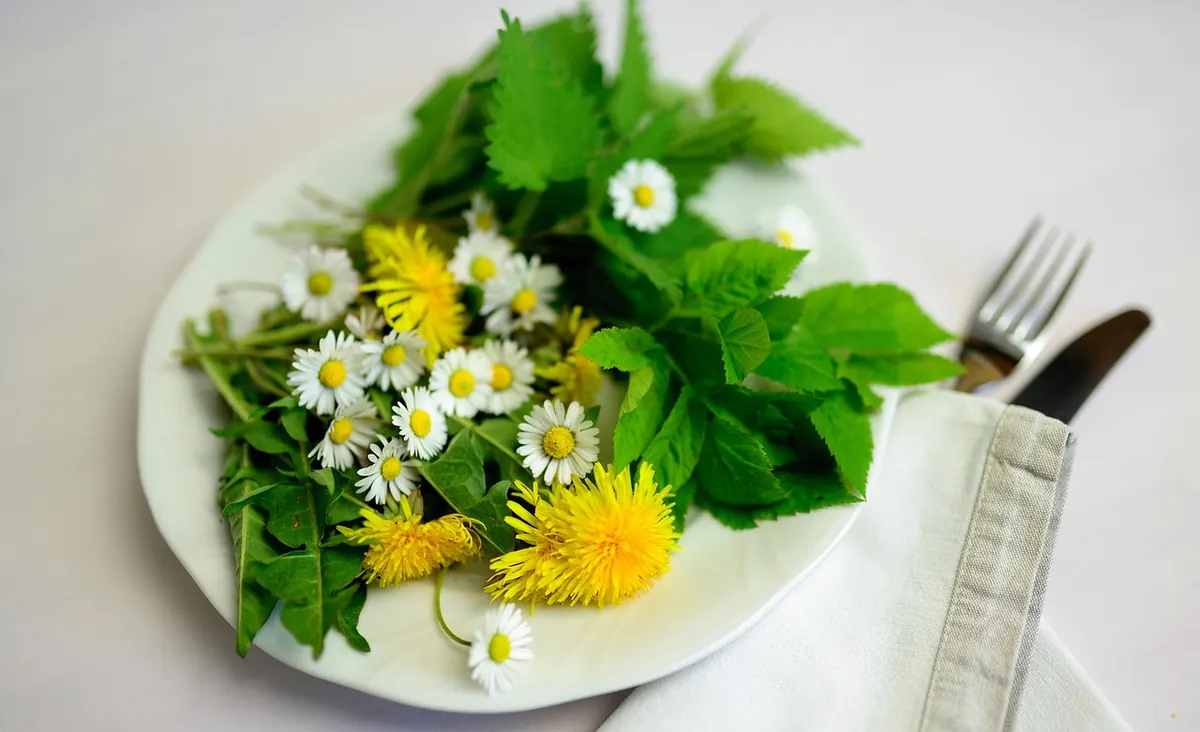
Photo: congerdesign / Pixabay